Liesel Jolly: A Leading Figure in Women’s Football Development

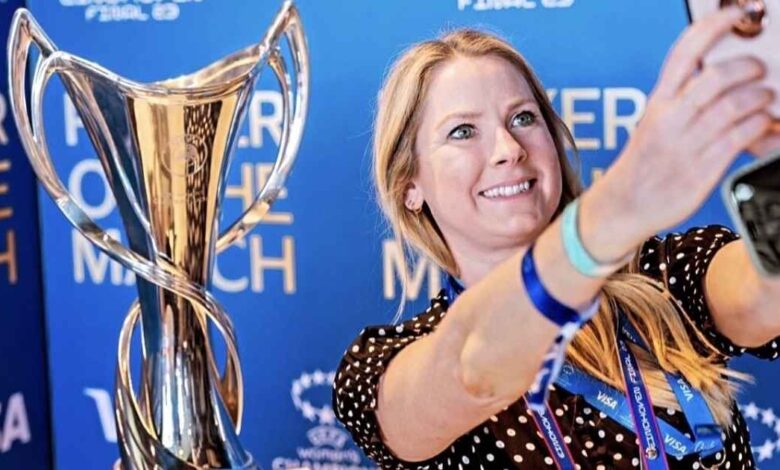
Women’s football is growing fast. Attendance records are breaking. Sponsorship dollars are flowing in. And behind much of that progress, you’ll find professionals like Liesel Jolly quietly driving the machine. She isn’t a household name yet, but in the world of women’s sports development, her fingerprints are everywhere.


This article breaks down exactly who she is, what she has built, and why American fans of women’s soccer should know her story.
Professional Career and Achievements
From Corporate Boardroom to the Football Pitch
Liesel Jolly didn’t come up through football. Her background is in corporate marketing, sponsorship strategy, and business development. That might sound like an odd entry point into sports. But it turns out that women’s football development needed exactly this kind of mind.
At Visa, she serves as Women’s Football Lead for Europe. That role puts her at the center of some of the biggest deals in the global women’s game. She helped position Visa as the first major brand to formally partner with UEFA Women’s Football, a milestone that signaled to the entire sports industry that women’s soccer was worth serious investment.
Think about what that means for American fans. The NWSL’s recent explosion in sponsorship interest, the record TV deals, the sold-out stadiums? The corporate confidence that fuels all of that was partly built by people like Jolly, who made the business case long before it was fashionable.
Key Career Milestones at a Glance
| Year | Achievement |
| Pre-2020 | Helped Visa become first major UEFA Women’s Football partner |
| 2021 | Launched The Second Half programme across the UK |
| 2022 | Programme expanded into Portugal and Spain |
| 2023 | Partnered with Barclays UK to scale The Second Half |
| Ongoing | Women’s Football Lead, Visa Europe |
The Second Half: A Career-Defining Initiative
Visa launched The Second Half as a career development programme to support professional female footballers in Europe as they consider their careers beyond the football pitch. Jolly was central to creating it.
The programme helps players recognize the transferable skills they developed as professional footballers and opens new career pathways with support tailored to individual goals, including areas well outside traditional media and coaching roles.
That’s a big deal. Most athlete transition programs focus on media careers or coaching. The Second Half goes further. Sessions cover personal branding, financial management, partnerships, leadership, and CV writing. Real skills. Practical tools. The programme is free of cost for all participants and runs for 13 to 15 weeks online, with training sessions held virtually once a week.
Liesel Jolly’s Relationship with Karen Carney
A Partnership Built on Purpose
Jolly and Karen Carney co-created The Second Half, a programme supporting women footballers in their careers post-football. Carney brought the player’s perspective. Jolly brought the corporate engine. Together, they built something genuinely useful.
For American readers unfamiliar with Carney, here’s the quick version: she’s a former England international who earned 144 caps for the Lionesses, played for the Chicago Red Stars in the early days of women’s professional soccer in the U.S., and is now one of Britain’s most respected football broadcasters. She knows exactly what female athletes face when the final whistle blows on their careers.
Carney was appointed Chair of the Future of Women’s Football Review for the UK Government in August 2022, publishing her findings in July 2023 and helping shape policy and investment in women’s football across England. Jolly’s public support of that work was visible and vocal. On LinkedIn, she praised Carney’s leadership as “a huge positive step for Women’s football.”
What Their Collaboration Actually Looks Like
The Second Half was developed by Visa in collaboration with Carney and former Scotland international Kim Little MBE, with the aim of helping female footballers prepare for a smooth transition out of professional football when the time comes.
This isn’t just a logo partnership. Jolly personally mentored Liverpool FC player Yana Daniels through the programme, helping her build a woodworking business from the ground up, including a full product strategy, a Shopify website, and a pricing model. That’s hands-on female athlete career support.
Their Professional Dynamic: A Quick Comparison
| Contributor | Role | Brings to the Table |
| Liesel Jolly | Women’s Football Lead, Visa | Corporate strategy, sponsorship, programme management |
| Karen Carney OBE | Former England international, broadcaster | Player insight, public profile, policy influence |
| Kim Little MBE | Current WSL player, ambassador | Active athlete perspective, credibility with current players |
Public Image and Private Life
Quiet Influence in a Loud Industry
While Liesel Jolly has gained recognition for her contributions to women’s football, she has kept her personal life relatively private, with much of her visibility coming from her professional work.
That’s a deliberate choice. In an industry that rewards noise, Jolly operates with quiet authority. She lets the work speak. Her LinkedIn profile is a window into her values: she celebrates athlete milestones, flags important policy developments, and consistently frames her work around impact rather than personal brand.
Rumors have surfaced linking her personally to Karen Carney, but neither has confirmed any romantic relationship. Both have maintained that their connection is rooted in their shared professional commitment to women’s football.
What Her Public Presence Tells Us
She has shared data points that matter to the women’s football industry, including the fact that Arsenal Women currently average higher league attendance than nine Premier League clubs. For American sports fans who measure legitimacy through ticket sales and eyeballs, that stat lands.
It’s the kind of data-driven advocacy that changes minds in boardrooms. Not emotion. Evidence.
Advocacy for Women’s Football
Why Corporate Advocates Move the Needle
There are two kinds of advocacy in women’s sports. There’s the kind that happens on social media, loud and fast. Then there’s the kind that happens inside a Fortune 500 company, slow and structural. Jolly does the second kind.
Her work at Visa has driven women’s sports sponsorship into new territory. Before Visa committed to UEFA Women’s Football, many global brands were sitting on the fence. That partnership changed the calculus. It showed that women’s football visibility was not a charity project; it was a growth market.
Here’s what the Team Visa Women’s Footballer Programme delivers for athletes:
- Sponsorship contracting and legal support
- Content creation and media campaign opportunities
- Integration into mainstream Visa consumer advertising
- Mentorship and career development resources
- Community engagement and outreach platforms
Jolly has described the programme as one of the best parts of her job, noting her excitement about taking it to the next level with Barclays UK.
The Rachel Yankey Foundation: Grassroots Commitment
Jolly serves as trustee of the Rachel Yankey Foundation, which inspires young girls through football. This grounds her corporate work in something real. Grassroots development and global sponsorship strategy are two ends of the same rope, and she holds both.
For American audiences, think of it like the connection between the NWSL’s big-league ambitions and the Title IX programs producing the next generation of players. The pipeline matters at every level.
Liesel Jolly’s Personal Life and Impact
The Academic Foundation Behind the Executive
What makes Jolly’s story genuinely interesting is the path she took to get here. She studied Zoology and Behavioural Ecology before pivoting into business. Later, she earned an Executive MBA and a Senior Leadership qualification from the Chartered Management Institute.
A zoologist running women’s football strategy at one of the world’s largest payments companies? That’s the kind of unconventional career trajectory that proves sports business isn’t just for former players or traditional marketing graduates.
A Role Model for the Next Wave of Sports Executives
For young American women entering the sports industry, Jolly represents something important. You don’t need a playing background. You need strategic vision, a willingness to fight for underfunded spaces, and the patience to build things that last.
Her legacy in women’s football continues to grow, and her dedication to making a difference for female athletes is something that will inspire future generations of women in sport.
The women’s sports leadership conversation in the U.S. is dominated by names like Cathy Engelbert and Lisa Baird. Jolly belongs in that conversation too.
Conclusion
Liesel Jolly doesn’t need the spotlight to shape women’s football. Through Visa’s global sponsorship strategy, The Second Half programme, and a rock-solid partnership with Karen Carney, she has helped build the infrastructure that the women’s game actually runs on.
For American fans watching the NWSL grow in real time, understanding who builds these systems matters. Jolly is one of those builders. And her work is far from finished.